






Losing a family member in a preventable accident leaves survivors with questions that have no good answers and bills that keep arriving regardless. Florida law gives those survivors a defined right: the ability to hold a responsible party accountable and to recover what the death has cost the family. In Broward County, 210 people died in 206 fatal crashes during 2023, according to the FLHSMV Crash Dashboard. Each of those numbers stands for a household that suddenly had to work out how to move forward without someone.
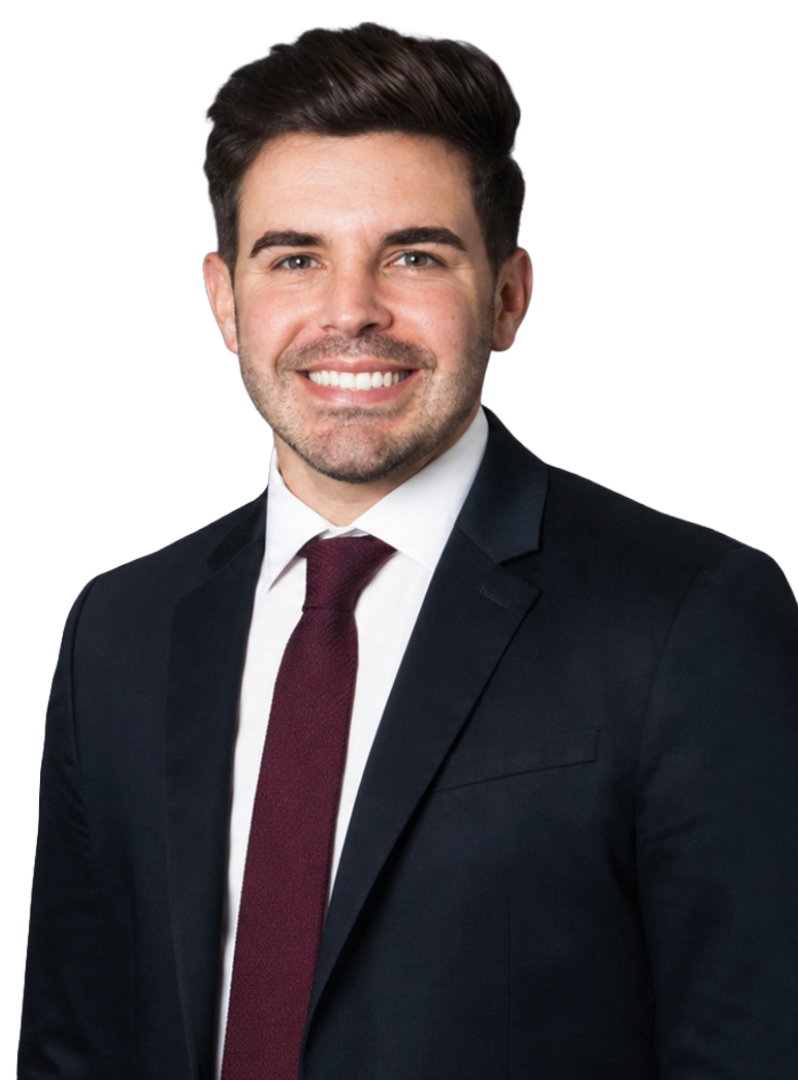
Attorney Brian Elstein handles these cases personally at Elstein Legal. Before he represented families, he spent years on the other side of the table as an insurance defense lawyer, building the arguments insurers use to reduce or deny payouts on exactly this kind of claim. He now puts that knowledge to work for the people insurers are trying to pay as little as possible, and every wrongful death case he takes runs through him directly, with no junior associate inheriting the file partway through.
Understanding Wrongful Death Claims Under Florida Law
A wrongful death claim is not the same thing as the criminal case that sometimes follows a fatal crash or shooting. A criminal prosecution punishes the wrongdoer on behalf of the state. A wrongful death action is a civil claim brought by the family, and its purpose is compensation for the survivors. The two can proceed at the same time, and the result of one does not control the other. It also only exists where the injury proved fatal. Families who reach this page while a loved one survived but will not recover are looking at a different claim, one that belongs to the injured person rather than to the estate.
Who Can File a Wrongful Death Claim in Florida
Florida routes every wrongful death claim through the deceased person’s estate. Under the Florida Wrongful Death Act, Fla. Stat. § 768.19, the personal representative of the estate files the lawsuit, but the recovery is for the benefit of the surviving family members. Those survivors can include a surviving spouse, children, and parents, along with any blood relative or adoptive sibling who was partly or wholly dependent on the deceased for support or services. The personal representative is usually named in the will or appointed by the court, and that person acts for everyone with a stake in the claim rather than for themselves alone. Working out who qualifies as a survivor, and what each is entitled to, is one of the first things a wrongful death lawyer addresses, because it shapes the structure of the entire claim.
What Damages Are Available
Florida law separates the losses the family suffers from the losses the estate suffers, and which category a loss falls into changes who can claim it.
Surviving family members can recover the value of lost support and services the deceased would have provided, the loss of companionship and guidance, and their own mental pain and suffering. For a surviving spouse, that includes the loss of the partner’s protection and companionship. For minor children, it covers the lost parental companionship, instruction, and guidance, along with their mental pain and suffering measured from the date of injury. Parents of a deceased minor child can recover for their own mental pain and suffering as well.
The estate recovers a different set of losses: lost wages and benefits from the date of injury to the date of death, the net accumulations the deceased would likely have built over a normal life expectancy, and medical and funeral expenses that became the estate’s responsibility. A family member who personally paid funeral costs can recover those directly.
Put plainly, the law compensates both the financial hole the death creates and the human loss behind it, and a complete claim pursues both.
The Two-Year Filing Deadline
Wrongful death claims carry their own filing deadline, separate from the one that governs an ordinary injury case. Under Fla. Stat. § 95.11, a wrongful death action generally must be filed within two years of the date of death. The starting point matters: the clock runs from the death, not from the accident, and those can fall on different days when a person survives an injury for a period before passing.
Two years sounds like plenty of time until you account for everything that has to happen in between. The estate has to be opened, a personal representative has to be appointed, records have to be collected, and the responsible party’s insurer has to be put on notice. None of that pauses the deadline, and neither do settlement negotiations. Once the two years run out, the claim is gone no matter how strong it was, which is why getting the process moving early protects the family’s options.
Common Causes of Fatal Accidents in Fort Lauderdale
Fort Lauderdale’s fatal accidents tend to cluster around a handful of recurring situations, and each one points to a different defendant and a different way of proving the case.
Commercial Truck and Freight Vehicle Crashes
The I-595 and I-95 corridor moves a heavy volume of commercial freight in and out of Port Everglades and the distribution centers built around it. When a loaded tractor-trailer causes a fatal crash, the parties who can be held responsible often reach well past the driver to the carrier that employed him, the company that loaded the freight, and the firm responsible for maintaining the vehicle. These cases turn on records that carriers can purge quickly, including driver logs and engine data, so preserving that evidence early is central to the claim. Families dealing with a fatal freight crash can read more about how these cases work on our truck accident lawyer page.
Boating Fatalities
Florida reports more recreational boating deaths than any other state, and the waters around Fort Lauderdale account for a steady share of them. The Intracoastal Waterway and the New River carry a constant mix of recreational vessels, charters, and commercial traffic. A fatal collision or a fall overboard can involve a negligent operator, an alcohol-impaired captain, or a rental company that handed the wheel to an unqualified customer. Boating fatality claims often involve agencies and rules that never apply on the road, and our boat accident lawyer page covers that ground in more detail.
DUI and Impaired Driving Deaths
The A1A and Las Olas corridor combines nightlife, foot traffic, and a constant flow of vehicles, and impaired driving deaths there follow a documented pattern. Florida’s no-fault auto system, set out in Fla. Stat. § 627.736, requires drivers to carry Personal Injury Protection that pays a portion of medical costs regardless of fault. That coverage was designed for injuries, and it does not resolve a death claim. When an impaired driver kills someone, the family’s recovery comes from the at-fault driver’s bodily injury liability coverage and, in many cases, from a bar or venue that overserved a visibly intoxicated patron before the crash. The liability analysis overlaps with any serious collision, which our car accident lawyer page walks through. The Fort Lauderdale Police Department and the Broward County Sheriff’s Office generate the crash and arrest records that anchor these claims.
Fatal Falls and Premises Accidents
The hotels and resorts along A1A, together with the docks and marinas lining the waterway, create conditions where a fatal fall becomes a premises liability question. A fall from an unguarded balcony, a drowning in an unfenced or unsupervised pool, or a fatal injury on a poorly maintained dock can each support a claim against the property owner or operator. Hospitality companies carry substantial insurance and the legal teams that come with it, so proving the property knew about a hazard and failed to correct it is the core of the case. Our premises liability lawyer page goes deeper on how Florida treats dangerous-property claims.
How Florida’s 2023 Tort Reform Affects Wrongful Death Cases
In March 2023, Florida overhauled its negligence law through HB 837, and the changes reach wrongful death claims directly. The most consequential of them is the move to modified comparative fault under Fla. Stat. § 768.81.
Under the old rule, a survivor’s recovery was reduced in proportion to any fault assigned to the deceased, but the claim survived even when the deceased was mostly responsible. The current rule sets a hard ceiling. If the deceased is found more than 50 percent responsible for the accident that killed them, the survivors recover nothing at all. At 50 percent or below, the recovery is cut by the assigned percentage.
That threshold is where defense teams concentrate their effort, especially when the defendant is a commercial carrier, a hospitality company, or a boat operator with real insurance money at stake. A trucking company’s lawyers will look for any basis to argue the deceased driver was speeding or distracted. A resort will argue that a guest who fell ignored a posted warning. The objective is the same: push the deceased’s share of fault above the line so the whole claim collapses. Having built those same arguments from the defense side, Brian Elstein prepares the case to neutralize the strategy before it gains traction, documenting the other party’s conduct so fault stays where it belongs.
What the Legal Process Looks Like
Families are usually reading this in the middle of grief, so the short version is that the lawyer carries the procedural weight, not the family.
A wrongful death case starts with investigation rather than a lawsuit. Before anything is filed, the firm gathers the crash or incident reports, identifies every party who may share responsibility, locates witnesses, and sends preservation demands so evidence such as vehicle data, surveillance footage, and maintenance records does not disappear. If the estate has not been opened, that is handled so a personal representative is in place to bring the claim.
Most wrongful death cases are presented to the responsible parties’ insurers first, with a demand supported by the investigation, and many resolve through negotiation. When a fair settlement is not on the table, the case is filed in the Broward County Circuit Court, which sits in the 17th Judicial Circuit, and the matter moves through discovery toward trial. Court filings and case records run through the Broward County Clerk of Courts.
Timelines vary with the facts. A straightforward claim against a single insured defendant can resolve in well under a year. A case against a commercial carrier or a hospitality company, with multiple defendants and disputed fault, can take a year or longer once it enters litigation. The family is kept informed at every stage, and no settlement is accepted without the family’s agreement.
Why Hire Elstein Legal for a Wrongful Death Case in Fort Lauderdale?
We Handle These Cases Personally
When you call Elstein Legal, the lawyer working your case is Brian Elstein. He does not pass wrongful death files to a rotating cast of associates or treat a grieving family as a number in a high-volume pipeline. These claims are emotionally heavy and legally demanding, and they get his direct attention from the first conversation through resolution.
Experience with High-Complexity Defendants
Wrongful death claims in Fort Lauderdale frequently put a family up against well-resourced opponents: commercial trucking carriers with experienced defense counsel, hospitality companies running national insurance programs, and boat operators backed by marine insurers. Brian Elstein spent the early part of his career as an insurance defense lawyer, building the very arguments these companies now use to limit what they pay. He understands how an insurer values a death claim, where it tries to assign fault, and how it tests whether a family’s lawyer is genuinely prepared to try the case.
No Fee Unless We Win
Elstein Legal handles wrongful death cases on a contingency basis. The family pays no attorney’s fee up front and no fee at all unless the firm recovers compensation. The firm advances the costs of building the case, and those costs come out of the result rather than getting billed to a family already facing funeral expenses and lost income. The Broward County Circuit Court that hears these cases is located at 201 SE 6th Street, Fort Lauderdale, in the 17th Judicial Circuit.
If your family has lost someone in a Fort Lauderdale accident, you can reach Elstein Legal at (305) 299-2835 for a conversation about your options, at no cost and with no obligation.
Meet Brian L. Elstein, Florida Personal Injury Lawyer
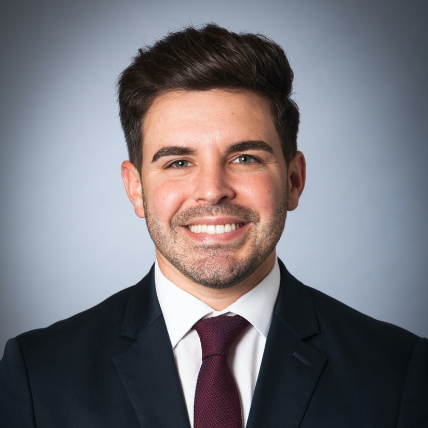
Personal injury lawyer Brian L. Elstein, Esq. has helped recover millions of dollars on behalf of his clients, and understands the importance of aggressively advocating for injured victim’s and their families.
Call now for a FREE consultation!
(305) 299-2835
Contact Us for a Free Consultation
If you or a loved one has been injured in an accident, you deserve expert legal representation to seek the justice you deserve and obtain fair compensation. You will gain an advocate for every stage in the claims process until you have the compensation you deserve.
Call us at (305) 299-2835 or contact us today for a free consultation to discuss your case. There is no fee unless we win your case.