






Brightline and the Fort Lauderdale Crossing Problem
Fort Lauderdale sits on one of the busiest rail corridors in the state. Brightline’s higher-speed passenger service shares the historic Florida East Coast Railway tracks with freight trains running down to Port Everglades, and the route cuts through downtown and the surrounding neighborhoods at street level.
A year-long investigation by the Miami Herald and WLRN, published in 2025, identified Brightline as the deadliest passenger railroad per mile in the country. Reporters counted more than 180 deaths along the Florida line since it began testing in 2017, and the toll kept rising through 2025 and into 2026. Broward County’s segment has been among the worst stretches anywhere on the route. In March 2026, a pedestrian was killed at the Andrews Avenue crossing near the downtown station, one of several Fort Lauderdale crossings local planners have flagged for possible grade separation.
Through this part of South Florida the trains move at up to 79 miles per hour, with the line built for higher speeds farther north, and a Brightline train can need close to a quarter mile to stop. Almost all of the corridor’s crossings are at grade, level with the road, and a long section of Broward track falls inside a federally approved “quiet zone” where horns stay silent except in an emergency. The Federal Railroad Administration (FRA), which oversees grade crossing safety nationwide, took the rare step of re-reviewing Broward’s quiet zone in 2023 after deaths climbed.
Federal Law and Train Accident Claims
A train case does not run on the same track as an ordinary car wreck. Federal statutes and safety regulations sit on top of Florida injury law, and which rules control depends on who you are and how you were hurt.
FELA: The Federal Employers’ Liability Act
If you were working for the railroad when you were injured, your claim usually does not go through workers’ compensation at all. The Federal Employers’ Liability Act, passed in 1908, lets railroad employees sue their employer directly for negligence. A FELA claim carries its own proof standards and its own three-year filing window, separate from the deadlines that apply to passengers and the public.
Federal Preemption
Congress set national safety standards for railroads, and in some situations those federal rules displace claims a person might otherwise bring under state law. Whether a state-law theory survives can turn on the specific regulation at issue, such as the authorized track speed or the warning-device requirements at a particular crossing. Sorting out what federal law preempts and what it leaves intact is one reason these cases call for a lawyer who works in both systems.
Standard Negligence Claims for Passengers and Bystanders
Most people hurt by a train in Fort Lauderdale are not railroad employees. They are drivers, pedestrians, cyclists, or paying passengers, and their claims proceed under Florida negligence law, with federal safety standards often setting the benchmark for what the railroad should have done. Proving the railroad fell short of that benchmark, on horn use, gate maintenance, sight lines, or crossing design, is the core of the case.
Florida also follows a modified comparative negligence rule. Under Fla. Stat. § 768.81, a court reduces your recovery by your share of the blame, and HB 837 added a hard cutoff in 2023: a person found more than 50 percent at fault recovers nothing. Railroads lean on this rule. Expect the company to argue that a driver went around a lowered gate, or that a pedestrian crossed outside a marked path, and to push the fault percentage as high as it can. Contesting that number often decides the value of a train case.
Common Fort Lauderdale Train Accident Types
Grade Crossing Accidents
The collisions that draw the most attention happen where roads and tracks meet at the same level. Some crossings along the Broward corridor have a gate arm on only one side of each lane, which leaves room for a driver to steer around a lowered gate into the path of an oncoming train. People on foot and on bikes are struck as well, and they account for most of the deaths the Herald and WLRN documented. When a car is hit at a crossing, the occupants may have claims that overlap with what our car accident lawyer practice handles, layered on top of the action against the railroad. Those struck while walking or riding raise different questions about warning devices and visibility, which our pedestrian accident lawyer and bike accident lawyer pages cover in more detail. Crashes that damage a vehicle are logged in state crash reports compiled on the FLHSMV Crash Dashboard. A person who survives being struck can be left with an amputation or another permanent loss the body does not recover from, and the case is then valued on what the rest of that life will need.
If you were behind the wheel of a car struck at a crossing, your own auto policy’s Personal Injury Protection pays your first medical bills regardless of who was at fault, up to the $10,000 limit set by Fla. Stat. § 627.736. Florida’s no-fault law also requires you to seek treatment within 14 days of the crash, or that coverage is lost. PIP does not reach people struck while walking the tracks or riding the train, since a train is not a motor vehicle under the statute, so for most train injuries the claim against the railroad sits at the center.
Platform and Boarding Injuries
Not every train injury happens on the tracks. People are hurt at the downtown Fort Lauderdale Brightline station too, in falls on the platform or in the gap between the train and the platform edge while boarding. These cases look more like premises claims and turn on how the station was maintained and staffed.
Passenger Injuries During Travel
Riders are injured aboard the train as well, when emergency braking throws them forward, or when the train strikes a vehicle and the jolt injures people inside the cars. Tri-Rail runs commuter service on a parallel corridor through Broward, and its riders face comparable risks at lower speeds. You can identify that line at Tri-Rail.
Two-Year Filing Deadline
Florida used to give injury victims four years to sue. That changed in March 2023, when HB 837 shortened the deadline. Under Fla. Stat. § 95.11(5)(a), most negligence claims, including injuries from a train striking a car or a person, now have to be filed within two years of the date of the accident. A wrongful death lawyer claim brought by a family after a fatal crossing collision carries the same two-year limit, measured from the date of death.
Railroad workers are the exception. A FELA claim has a three-year deadline set by federal law, not the Florida statute. Because the right deadline depends on your status, and because the physical evidence at a crossing disappears within hours, it is worth talking to a lawyer early instead of assuming you have years to act.
Why Hire Elstein Legal?
Federal Railroad Law Requires Specific Experience
A train case is not a bigger car case. It blends federal preemption questions, FRA crossing standards, the possibility of a FELA claim, and a defendant with deep pockets and seasoned counsel. Brian Elstein spent the early part of his career on the other side, defending insurers and the companies they cover. He saw how a defense team gets to a crash within hours, locks down event-recorder and signal data, and assembles a file aimed at paying as little as possible. He brings that same approach to the side of injured people now, and every case he takes, he handles himself, with no handoff to a junior associate.
No Fee Unless We Win
Elstein Legal works on a contingency basis. You pay nothing up front and owe no attorney’s fee unless the firm recovers money for you, by settlement or by verdict. That arrangement matters in train cases, where the investigation can run expensive and the railroad is in no hurry to pay. If a case needs an accident reconstruction expert or a signal engineer, the firm advances that cost while the claim moves forward.
Cases out of Fort Lauderdale are filed in the Broward County Circuit Court, part of the 17th Judicial Circuit, at 201 SE 6th Street in downtown Fort Lauderdale. Filings go through the Broward County Clerk of Courts.
Frequently Asked Questions
Meet Brian L. Elstein, Florida Personal Injury Lawyer
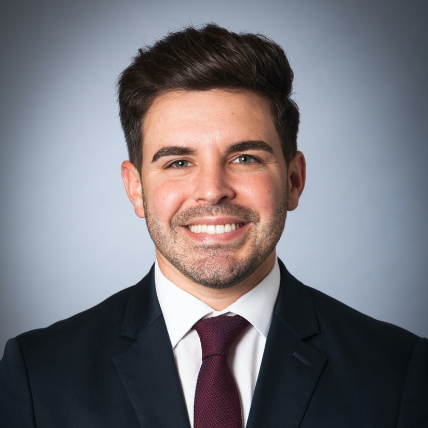
Personal injury lawyer Brian L. Elstein, Esq. has helped recover millions of dollars on behalf of his clients, and understands the importance of aggressively advocating for injured victim’s and their families.
Call now for a FREE consultation!
(305) 299-2835
Contact Us for a Free Consultation
If you or a loved one has been injured in an accident, you deserve expert legal representation to seek the justice you deserve and obtain fair compensation. You will gain an advocate for every stage in the claims process until you have the compensation you deserve.
Call us at (305) 299-2835 or contact us today for a free consultation to discuss your case. There is no fee unless we win your case.